

Why Chinese vocabulary needs more than a translation list
A Chinese word is not just a translation. Learners need to connect characters, pinyin, tones, meaning, example sentences, and the situations where the word is actually used. If those pieces live in separate notes, review becomes slow and inconsistent.
Many learners also collect words from textbooks, videos, teachers, screenshots, and reading materials. The words are useful, but they rarely become a repeatable study plan. Without spaced repetition, the same words keep feeling familiar but disappear during listening, reading, or conversation.
How FreeLingo helps
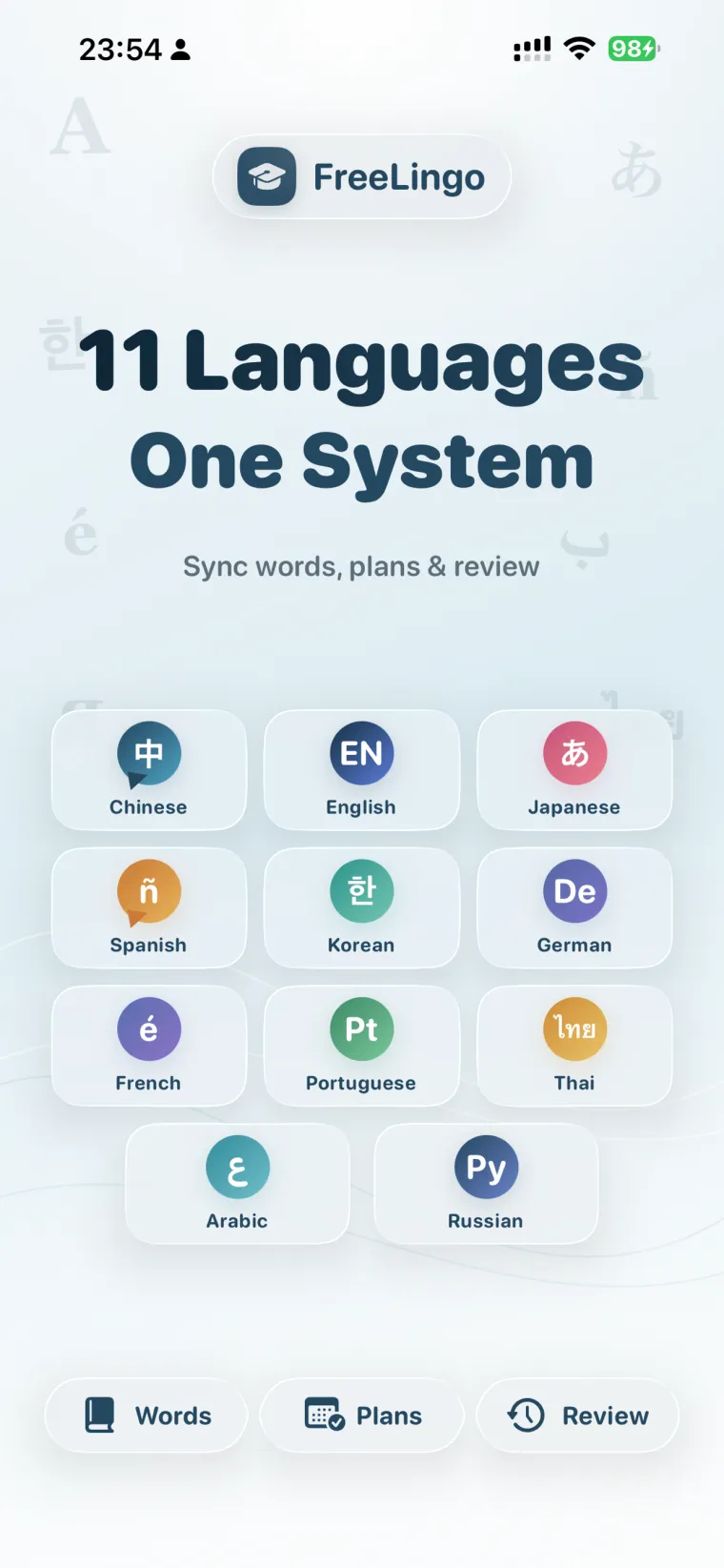
FreeLingo turns Chinese vocabulary into structured learning plans. You can start from Chinese word books, HSK-style lists, daily-life topics, or your own imported text. After study, FreeLingo schedules review sessions at spaced intervals so words come back before they fade.
Review can include flashcards, listening, spelling, tests, AI word cards, and AI conversation practice. The goal is not only to recognize a Chinese word, but to remember its sound, tone pattern, meaning, and usage in context.