

Why recognizing Spanish words is not the same as using them
Spanish hides known words inside conjugation: you learned 'tener', but conversation delivers 'tuve', 'tendría', 'ten'. Vocabulary stored as isolated dictionary forms, with no examples and no audio, produces learners who read comfortably and freeze in speech — the most common plateau in Spanish self-study.
False friends compound it. 'Embarazada', 'actual', 'asistir' look like English words and mean something else, and a bare word-translation list gives you no warning. Meanwhile the words you meet traveling or watching series pile up in notes that never get a second look.
How FreeLingo helps
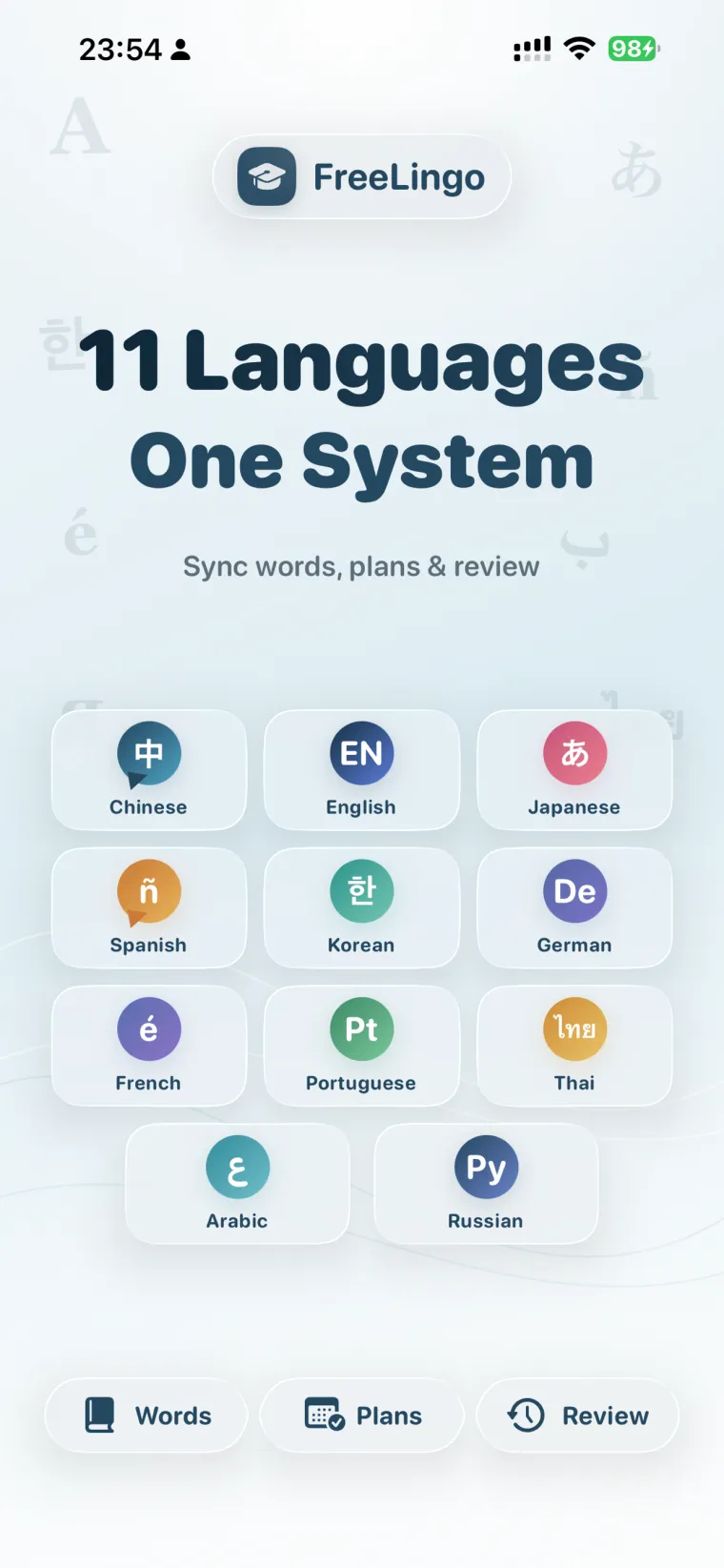
FreeLingo stores Spanish words with what conversation requires: pronunciation guides, collocations, and example sentences on AI word cards, plus AI Misuse cards that flag the classic false-friend traps. Plans start from DELE- and SIELE-aligned word books, scene sets like travel and work, or your own imported materials.
Listening review turns any plan into an audio queue — configure preparation time and repeat count, and train your ear on the same words your eyes already know. Every word follows the 8-checkpoint schedule: 30 minutes, 12 hours, then 1, 2, 4, 7, 15, and 30 days.