

Why Japanese words feel familiar but fail in listening and on the JLPT
Kanji creates an illusion of knowledge. You see 勉強 and remember 'study', but can you produce べんきょう without hesitation? JLPT listening sections and real conversation give you only the sound — if your flashcards only trained the visual form plus an English translation, half of every word was never learned.
The second problem is where Japanese words come from. After the first textbook, vocabulary arrives from anime subtitles, drama scripts, graded readers, and class handouts. Those words end up in screenshots and scattered notes with no review date, so the interesting words — the ones that motivated you — are exactly the ones that fade first.
How FreeLingo helps
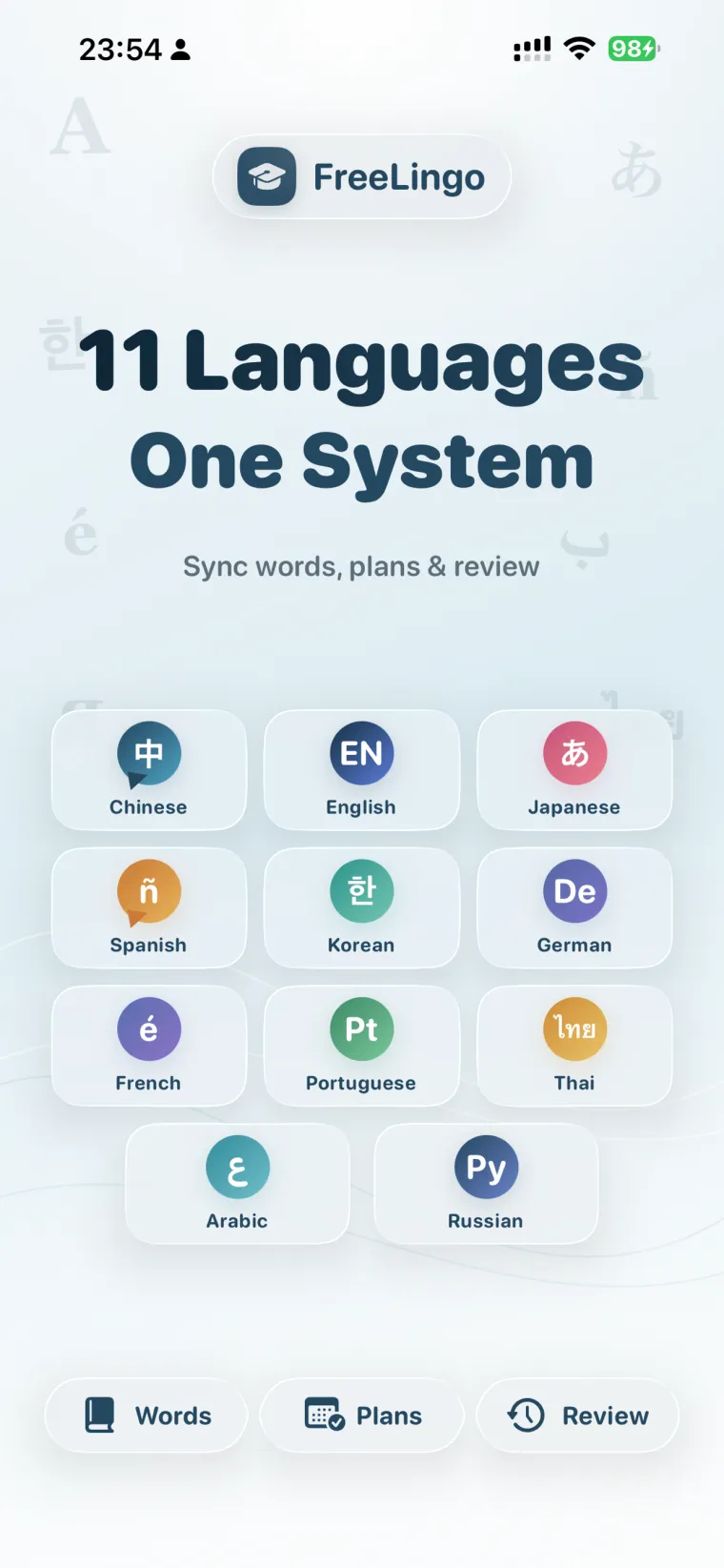
FreeLingo builds Japanese study plans from JLPT-graded word books (N5 to N1), scene-based sets like campus, workplace, and daily conversation, or anything you import yourself — pasted text, OCR from screenshots, subtitle files, or voice notes. Duplicates are filtered before the plan is created, so your N5 deck does not drown in words you already know.
During review, AI word cards show furigana, readings, pitch accent hints, and example sentences, and listening mode plays the word before you see it — training sound-first recall, the direction the JLPT actually tests. Each word then returns at 30 minutes, 12 hours, and 1, 2, 4, 7, 15, and 30 days.